Titles of James Bond 007

bondOn a weekend when you want to have fun,

It’s worth seeing “The Man with the Golden Gun”

You need to let the little things that would ordinarily bore you to suddenly thrill,

But those little things must never mean the “Licence to Kill”


When we think of world peace, we think of a dove,

The place must originate from “From Russia with Love”

Countries must not separate each other by building a wall,

Since nature maintains its balance with the “Skyfall”


On snow-capped mountains, soldiers slip and fall,

Their minds are illusioned with the image of a “Thunderball”

However they always find a way to resurface,

Since they are “On Her Majesty’s Secret Service”


While dating if you find no takers,

Then it is time to sail on the “Moonraker”

Suddenly in your life when you find she,

You will refer to her as “The Spy Who Loved Me”


Trekking means a travelling experience with a thrill

When you reach the top of the mountains it is like a “A View to a Kill”

When on a holiday we are told to be loyal,

However one always ends up at “Casino Royale”


Even if people think you are not wise,

It’s fine, since at the end of the day “You Only Live Twice”

When in trouble do not lie,

It is better to “Live and Let Die”


In your career when you are in your twilight,

Join an NGO and erase “The Living Daylights”

When you need to move on, but memories tend to linger,

It is better to switch and go for the “Goldfinger”


If you are under scrutiny and meet the tax collector,

Pay your dues before he becomes a “Spectre”

When the time comes to claim a share of the pie,

You are always ahead as “Tomorrow Never Dies”


Sickness is time we regret and say Oh,

However our minds resound with “Dr. No”

If you are feeling down and lonely,

Watch the movie which is “For Your Eyes Only”


When you lose a loved one and are clueless,

Then time will heal like a “Quantum of Solace”

Being busy at work as time fades by,

You will realise there is “No Time to Die”


Achieving all life ambitions may be tough,

And soon you realise “The World Is Not Enough”

In life, we are taught to aim for the sky,

For that we require the “Golden Eye”


When we face losses we think no way,

But we all forget we have to “Die Another Day”

On reaching close to the target we feel it’s now or never,

Trying again is essential since “Diamonds Are Forever”

Rediscover the Christmas Symbols

In today’s changing world where there is so much of anger and anxiety, it is the Christmas season which is a turnaround time. My poem is on rediscovering the Christmas Symbols in relevance to the changing times. I hope and pray that my poem inspires people to let go of their past and head into the new year with renewed passion to achieve their life goals.

2018 Card

Life is like riding a bicycle,
Unless it freezes like the ‘Icicles’
When you were born you were free,
Now it is time to scale up like a ‘Christmas tree’


In the market parents were flocking,
To add their goodies in a ‘Stocking’
Children are anxious but they have to pause,
And leave the surprise with ‘Santa Claus’


When in anger do not yell,
Only listen to the sound of the ‘Bell’
Advent is the time to let go of foes,
And let your life grow like a ‘Mistletoe’


Do not let your worries weigh,
Let it ride away with the ‘Reindeer and Sleigh’
It is better to forgive and be part of the clan,
Unless you want to remain frosty like the ‘Snowman’


Do not allow your dreams to bequeath,
Just remember and pin them on the ‘wreath’
Aim high, Aim far,
Aim for the sky and you will reach the ‘Star’

What’s Up

what is up_01

The use of What’s app messenger has not only changed the way we communicate online but also how we communicate in person. Slang language or Internet slang as it commonly known as, is mostly used in communication. It’s difficult to tell where they come from, but most of them have originated from online chat rooms, games and later get popular on Social media like Facebook and twitter.

“What’s up” is an extremely annoying question that has (unfortunately) replaced “Hello” or “Hi” as the most popular form of casual greeting. As per some Dictionaries it is an informal way of saying what’s happening. But reality is much different from the dictionary meaning. When a person is faced with this question there is no defined answer for the same.

Prior to the use of this slang the conversation starter was “Hi, How are you?” The general response was “Fine. Thank you”. Now when people are faced with this rhetorical question “What’s up”, they do not know how to respond to the same. Some just smile back, others say the sky or ceiling or whatever is above them. If you ask the question on Google the answer is “Nothing Much.”

According to David Crystal there is an old little jingle: ‘The chief use of slang is to show that you’re one of the gang.’ What that means is that every social group has its own linguistic bonding mechanism. If there’s a group of professionals, they have their own slang, and so on. In future I wouldn’t be surprised if a bestseller turned out to be a slang dictionary!

Some critics believe that when slang language becomes more commonplace it effectively eradicates the proper use of a certain language. However, other linguists believe that language is not static but ever-changing. Everything in this world has two sides, one positive and one negative. The use of What’s up is no different. It is not a black or white, but grey whose pros and cons are decided by the user himself. I would like to end with quote given by the American Artist Corita Kent

“Words have life and must be cared for. If they are stolen for careless slang, they need to be brought back to their original meaning – back to their roots.”


Speed Thrills But Kills!!!

bullet-train-india-696x464

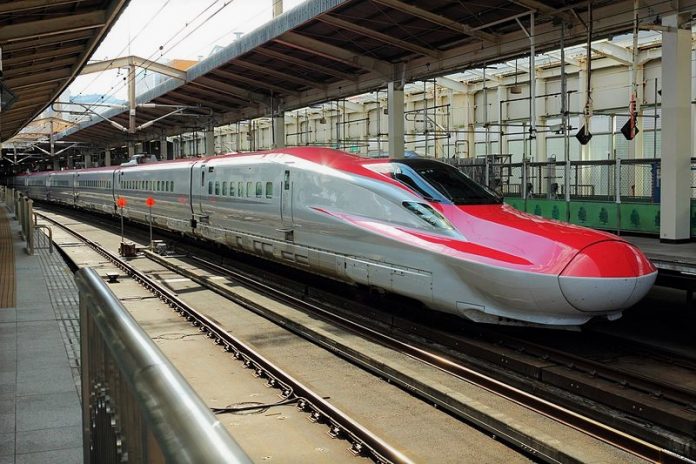
Speed is the need of the hour.  That is what is mostly claimed by telecom companies advertising for 4G networks. Every newly invented product has increased speed as one of its major features. The pace of life has increased due to speed. India still considered a developing country has a lot of ambition to match the developed countries.

India’s financial capital Mumbai has been one of the fastest growing cities worldwide. In the recently concluded Union Budget 2018, Mumbai was allocated Rs 11,000 crores to add 90 km of double line tracks of Mumbai local trains, which is the lifeline of the city. The suburban network, used by around 8.50 million commuters daily, will also be expanded with another 150 km of railway lines to be laid at a cost of Rs 40,000 crore, which will for the first time include elevated corridors in some sections of the space-starved city. The above allocation of Rs 51,000 crore is a big relief for daily commuters.

However the desire to reach the pinnacle before the base is secure could leave the island city in a bit of trouble. Below I have tabulated the data for India’s most ambitious transportation projects:

Bullet Train Hyperloop
Conceptualised 1930 2013
Implemented 1964 Not yet. (Companies aim is 2021)
Number of Countries having the system U.S., U.K., Europe, Japan, China, Russia, Taiwan, Turkey, Uzbekistan None.

Dubai and Mumbai in the race to be the first.

India’s Interest 2013 2018
Expected implementation date 2022 2024
Estimated Cost 1,10,000 crore 20,000 crore
Distance Covered 508 km (Mumbai- Ahmedabad) 150 km (Mumbai-Pune)
Speed 320kmph 1200kmph theoretical. As on date only 387kmph
Duration 2 hours and 8 minutes from the current duration of 7 hours 25 Minutes from the current duration of 3 hours

Mumbai being the 4th largest city in the world in terms of population which is currently more than 22 million, has 70% residing in slums. In contrast, it is also the cities to host the world’s richest people. As a result new speedy transportation systems will thrill the rich and kill the livelihoods of poor who have been relocated to make way for new transportation systems. The gap between the rich and the poor will only widen.

“Contentment is natural wealth, luxury is artificial poverty” – Socrates

    Lastly given Mumbai’s space constraints, it is nearly impossible to house so many transportation modes. We are already running out of open spaces. Moreover to accommodate new transportation systems would include evacuating people from certain areas to make available the provisions and facilities. This reminds me of Steven Wrights quote “You can’t have everything. Where would you put it?”

Aadhaar Linking: What will happen if Supreme Court rules in favour of the Government this time?

uses-of-aadhaar-card

“Only those who risk going too far, can possibly know how far one can go”- T.S. Elliot

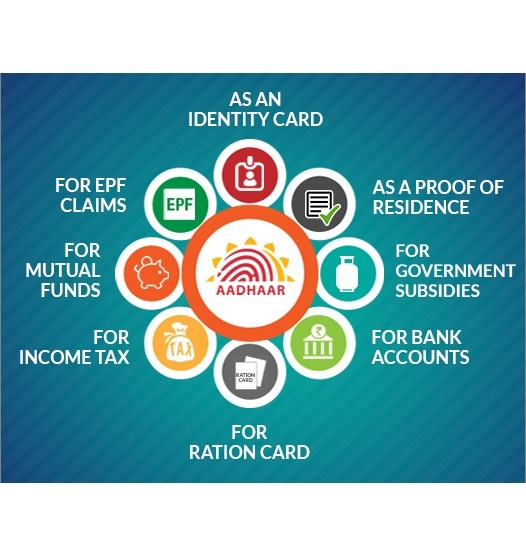
The above quote is exactly what the Government of India is trying to achieve since the past one year. Aadhaar is being made mandatory for bank accounts, Income tax returns, mobile numbers etc. Various authorities such as banks, post offices, insurance companies, telecom companies etc are sending repeated SMSs or emails to link Aadhaar or else the facilities provided by them will be deactivated.

Currently there are more than 1.17 billion Aadhaar holders in the country. The Aadhaar was initially conceptualised only to pass on the benefits of the government to the common man such as LPG subsidy money directly transferred to a bank account which is Aadhaar-linked, digital life certification for pensioners etc. But over a period of time usage of Aadhaar has moved from being voluntary to mandatory.

On 24 August 2017 the apex court of India passed a landmark judgement, wherein it was held that privacy is a fundamental right under the Constitution with reasonable restrictions. Now that there is a standard i.e. the right to privacy, the government will have to convince the court that privacy concerns surrounding Aadhaar, fulfil the test of reasonable restriction.

Few days ago, a senior government official stated it will give 3-6 months to link the biometric identifier Aadhaar with PAN in case the apex court rules in its favour, after which it may cancel all PANs that have not been linked. As of November, 13.28 crore out of 33 crore PANs have been linked to the 12-digit Aadhaar.

The pace at which Aadhaar is being made mandatory, it seems that the Supreme Court will most likely to rule in favour of Aadhaar. The government will simply argue that sufficient efforts have been made to link Aadhaar to bank accounts, PAN card, mobile numbers etc. It is a method to ensure a unique identity of the individual and provide benefits of the government to the common man. Moreover Government will state that Aadhaar will fulfil the test of reasonable restriction and hence right to privacy will not be violated.

Now some people may think, what will happen if the database of the Government gets hacked or the government decides to monetise the data it has on hands? The big question is: Can the people sue their own government? The answer is “NO”. This is because even though Article 300 of the constitution gives the people the right to sue their government, it may not be possible to sue the government for performance of “sovereign functions”.  Now providing Aadhaar card by the Government to the people is itself a sovereign function. Activities surrounding the use of Aadhaar if they benefit the citizens are also sovereign functions of the government. If not, government will ensure that the law is amended to make all activities surrounding Aadhaar “sovereign functions”.  As a result, the fate of common man is in the hands of the government!!!

Demonetisation Anniversary: Fillip the economy with the Phillips Curve

1037632_634422156175243750-1

“Once the true relationship between inflation and unemployment is understood, with luck and skill, a free lunch is possible.  ” – Paul Ormerod

Before we commence let us understand the basics of the Phillips Curve. The Phillips curve shows the inverse trade-off between inflation and unemployment. As one increases, the other must decrease. The theory states that with economic growth comes inflation, which in turn should lead to more jobs and less unemployment. While there is a short run trade-off between unemployment and inflation, it has not been observed in the long run.

The Phillips curve remains the primary framework for understanding and forecasting inflation used in central banks. The “Phillips Curve Relationship in India: Evidence from State-Level Analysis” published by the department of economic policy and research of RBI in July 2017 confirm the presence of a conventional Phillips curve specification, both for core inflation and headline inflation.

philips-curve

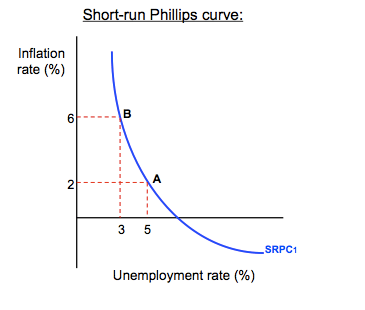
In this image, an economy can either experience 3% unemployment at the cost of 6% of inflation, or increase unemployment to 5% to bring down the inflation levels to 2%.

It is exactly a year since demonetisation has taken place. While the immediate impact of demonetisation was seen in the long queues outside ATMs and felt through acute cash shortage, its anniversary is an appropriate vantage point to assess the less visible and generalised effect on the economy. The GDP has been on the decline and was 5.7% for Q1 of 2017-18. It is expected to further decline in the next quarter. If there is slow economic growth, inflation will be low and hence unemployment will rise as per Phillips curve.

Central bank chiefs thus keep a very close eye on inflation and unemployment data of the overall economy to plan monetary policy accordingly. Whenever inflation is too low and unemployment too high, central banks increase the money supply to encourage greater employment. When this causes inflation to shoot up too high, they reduce the money supply, which results in lower inflation but also slightly higher unemployment. They try to maintain the level of unemployment at the non-accelerating inflation rate of unemployment, which is the unemployment rate at which inflation too is just under control.

Just a fortnight ago, the World Bank Group released a report for rankings on the ease of doing business. India jumped up 30 spots to be part of the top 100 nations. But this ranking has not factored in demonetisation impact on businesses. This exclusion raises questions on the basis of the ‘doing business’ rankings, since such an economic exercise had significant impact on the businesses, both big and small which in turn has an impact on GDP.

With 22% of the population below the poverty line, inflation and unemployment are the most important economic criteria that the RBI has to consider while framing the monetary policy. What does such Phillips curve mean for India’s monetary policy going forward? You might think that it is an invitation for policymakers to let unemployment fall well below the natural rate, and that doing so would not risk a significant pickup in inflation. This would be very risky.

In a country like India inflation burns the pocket while unemployment creates a hole in the pocket. Hence it is necessary to keep a good balance between these two important economic criteria (inflation and unemployment) for the overall growth of the economy as it will lead to financial inclusion of all sectors of society. The Phillips Curve is instrumental to keep a good balance between inflation and unemployment. If Paul Ormerod’s quote as mentioned in the beginning is to be taken literally, then the entire cost of the mid-day meal scheme of the Government of India will indeed be free!!!

The rationale behind the Income Tax Rate of 20% likely being reduced to 15%

income tax

“Inflation is taxation without legislation.”

 – Milton Friedman

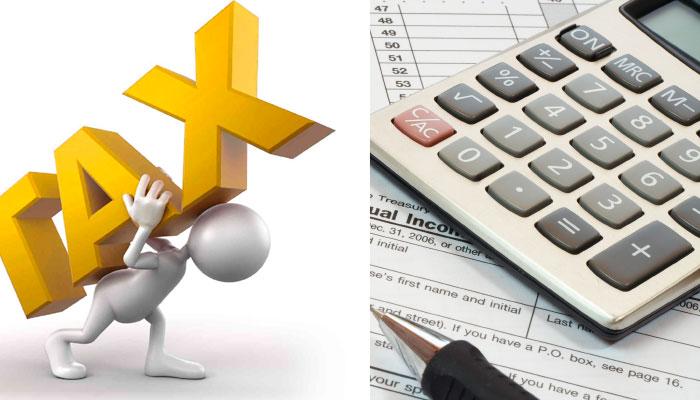
It is close to a year since demonetisation has taken place. GST the greatest tax reform since independence, has been rolled out a few months ago. Both of these reforms have an impact on inflation. Moreover the prices of petroleum products continue to be highly priced, despite the fact that international crude oil prices are low. High petroleum prices directly and indirectly impact all sections of society and have a magnitude impact on inflation.

One of the ways of compensating the general public for loss due to inflation is by reducing taxes. The table below gives us the status of the current direct and indirect taxes in India.

Income Tax Goods and Services Tax
Description Annual Income Rate Particulars Rate
Lower Income Group Rs 2.5-5 Lakh 5% Essential Goods 5%
Middle Income Group Rs 5-10 Lakh 20% Goods and Services 12% or 18%
Higher Income Group Above Rs 10 Lakh 30% Luxurious Goods 28%


If you observe the rates above and compare the two, you will understand that there is a major difference in the middle income group. The average of 12% and 18% is 15% and not 20%.

After Demonetization, the Finance Minister Arun Jaitley had said that – demonetization will not only bring back the unaccounted wealth into the economic system, it will also pave way for tax relief to honest tax payers by bringing the rates down. The middle class comprises of majority of the salaried class who contribute considerable part of the income tax on salary.

With the release of GST, Finance Minister Arun Jaitley dismissed the criticism of multiple rates under GST, saying it was not possible to tax luxury and common man’s goods at the same rate. He said it might be possible to converge some rates in the future. “We can converge some taxation in the future: 12% and 18% can be converged into one. But if we make a single rate of 15% now, then items like food, which are now at zero and are consumed by poor people too (will be affected),” FM said. “Direct tax is progressive. Indirect tax is regressive,” he said.

From the above statement of the finance minister, we can conclude that somewhere in the near future most goods and services are likely to be taxed at the rate of 15%. But this process will take substantial time and effort, since a detailed study is to be done before changing the rate. Moreover GST is a new law itself which has already caused a lot of confusion. Any changes made, is only likely to make more confusion, hence making any changes without research will be futile.

However in the case of Income tax which has been in existence for more than half a century, making changes is much easier. The past budgets do not appear to be changing the income tax slabs, but there seems to be an intention to reduce the income tax rates.

If the income tax rate is reduced from 20% to 15% then:

  • The benefits are most likely to go to the honest tax payer and there will be an increase in the number of income tax payers.
  • Income Declaration Scheme, Demonetisation and GST have all resulted in increased revenue for the Government as well as increased taxpayers, hence benefit of which must be passed on to the people by reducing rates.
  • This is the last budget before the next General Election, hence last chance to create an impression in the minds of the people.

Many economists believe: coercive taxation is theft and government has a moral duty to keep it to a minimum. Currently the 20% rate is four times the rate for the lowest income group taxed at 5%. By making amendments and reducing the rate to 15%, it will be reduced to three times. Richard M Langworth has rightly put it: “A nation cannot tax itself into prosperity.”

GST Impact on Weekend/Recreational Expenditure

GST-Image

“Weekends don’t count unless you spend them doing something relaxing.”

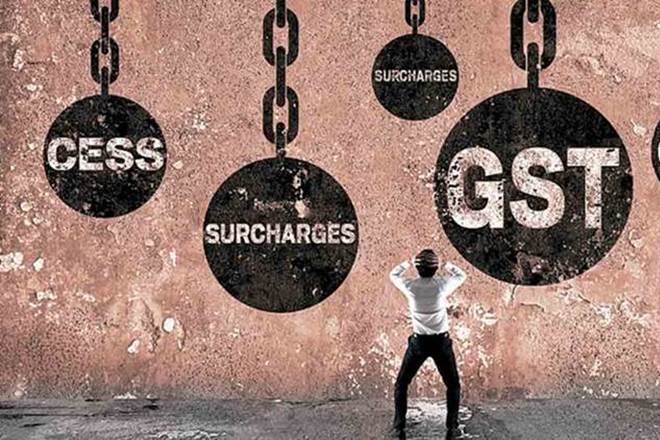
With the introduction of the Goods and Services Tax on 1st July 2017 spending on leisure or recreation activities is expected to burn a hole in your pocket.

Below is a sample illustration:

Mr X and Mrs X are newly married. They are in their early 30’s. Mr X earns 7 Lakhs p.a. while Mrs X earns 7.56 Lakhs p.a. Hence their total income is 14.56 Lakhs (assuming net take home pay). They decided to follow a simple process of spending 25% of their income on Savings, Investments, Necessities and Recreational expenses respectively. 25% of Rs 14.56 Lakhs is Rs 3.64 Lakhs and hence per quarter the expense will be Rs 91000/- Below is their recreational expenditure of Rs 91,000 they are expected to spend for 13 weeks in the quarter.

Before GST After GST
Week No. Particulars Estimated Exp Previous    Effective Rate* Rs GST Rate Rs Result
1 Movie Theatre

(price> RS 100)

1000 45% 450 28% 280     (170)
2 Amusement Park, Theme Park 2000 15% 300 28% 560      260
3 Bar & Restaurant 3000 18.5% 555 18% 540      (15)
4 Indian Premier League (price > RS 500) 4000 20% 800 28% 1120      320
5 Clothes Shopping

(price> Rs 1000)

5000 7% 350 12% 600      250
6 Gymkhana/Club 6000 18.5% 1110 18% 1080      (30)
7 Disco/Pub/Lounge/ Luxurious Locations 7000 25% 1750 28% 1960      210
8 Helicopter Ride (15 Minutes) 8000 15% 1200 28% 2240    1,040
9 Shopping Mall (Branded Merchandise) 9000 12.5% 1125 18% 1620     495
10 Yacht Cruise (2 Hours) 10000 18.5% 1850 28% 2800      950
11 Casino/Betting (Horse Race) 11000 18% 1980 28% 3080     1,100
12 Upgrading Gadgets (Once in 3 Months) 12000 6% 720 12% 1440       720
13 Resort Vacation 2N/3D (Tariff>2500) 13000 22.5% 2925 18% 2340     (585)
Total 91000 Net Increase     4,545

*Note: This refers to the average rate of tax in India. It includes Entertainment tax, Service Tax, Value Added Tax and other local body taxes.

As you can see from the sample illustration above, the couple will have to spend 5% {(4545/91000)*100} more on recreational expenses on account of GST.

Leisure lowers Stress and Depression. Mental wellness is an important part of your overall health and can impact your physical well-being. Recreation activities can help you better manage stress and reduce depression.

GST is an indirect tax. In indirect tax the ultimate burden is passed on to the customer. The big question is at what rate is the burden to be passed on? After the launch of GST, those having an optimistic view feel that multiple rates of taxes ensure that the major demerit of indirect tax being regressive in nature is done away with. It will reduce disparities between the rich and the poor.

But those having other views, feel that there should be a single rate of tax since the rich will spend more and will have an increased tax burden even with the same rate. For instance, if a hotel room is booked by a middle class person usually in a 3 star with a tariff of Rs 5000 the person spends Rs 900 as GST i.e. at the rate of 18%. If a rich person books a hotel room in a 5 star, with a tariff of Rs 15000 the person spends Rs 2700 as GST at the same rate of 18% which is more than the Rs 900 spent by the middle class person. If the person is taxed at the current rate of 28% for 5 star hotel room then the person has to spend Rs  4200. The rich person will argue that this is a double punishment, since such a person is already paying more income tax charged at a higher slab rate.

Irrespective of the view and counter view mentioned above, Mr X and Mrs X will realise that there is an increase in their weekend expenses at an average rate of 5% as per the above illustration. Hence they will have only one question in their mind, “Kya yeh hai Achhe Din?”

Demonetization: Why India needs a Rs 200 note

This is the excerpt for your very first post.

new-200-rupee-note

Let me begin with a question framed in an IAS exam: A lady bought Rs 200 worth of grocery from a shop and gave a note of Rs 1000/-. The shopkeeper didn’t have change so he arranged change of Rs 1000/- from a neighbour shopkeeper. He added Rs 200 to his cash box and handed over Rs 800 to the lady. After sometime the neighbour shopkeeper said that the Rs 1000 note is fake and he took Rs 1000 from the first shopkeeper. Now decide, how much loss the shopkeeper will have to bare? If you look up the internet you will realize there are many answers with different explanations and interpretations. My article is not about the answer to the above riddle but why it is essential to introduce the Rs 200 note before the Rs 1000 note.

In my college days I always wondered why India does not have a 200 rupee note since the sequence was missing. We have coins in the denomination of 1, 2, 5 and 10.  We have notes in the denomination of 10, 20, 50 then 100, 500 and 1000. Even when the value of the currency was declining, the RBI officials were planning to release Rs 5000 and Rs 10000 notes. Even at that point of time I wondered why the RBI was not thinking about the Rs 2000 note. The Demonetization scheme launched by Prime Minister Narendra Modi on 8th November 2016 took everyone by surprise. It aims to remove the evils of black money in the economy. The old currency of Rs 500 and Rs 1000 notes was demonetised and replaced with new notes of Rs 500 and Rs 2000. So my one thought about the Rs 2000 note became a reality. What about the Rs 200 note?

As per the media reports some individuals have already started replicating the new notes but with little success since they do not have the latest technology to reprint the same notes. However the highest denomination note of the old currency is Rs 100. RBI has recently announced that it will increase the supply of Rs 100 notes. Even those who withdrew from the ATMs a week before the announcement were surprised how they received only Rs 100 notes. Fraudsters are always waiting for a chance to take advantage of such situations. Hence duplication of the old Rs 100 will be augmented till the time the technology for duplication of the new Rs 500 and Rs 2000 commences. As usual many critics including opposition parties have criticised the Demonetization motive rather than its implementation. Hence in such situations starting something new may be challenging for the government. To the government officials I have the following quote

“Pay no mind to those who talk behind your back, it simply means that you are two steps ahead.”

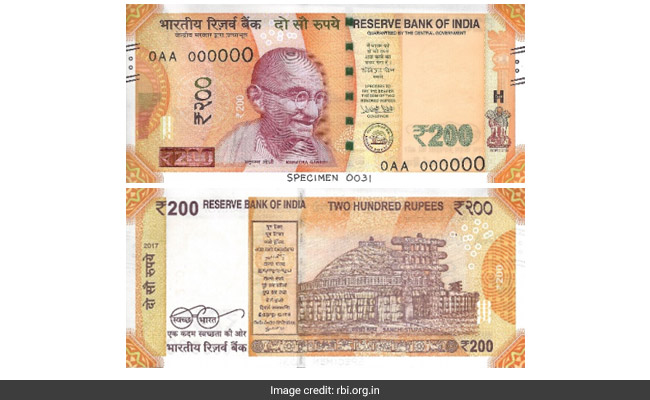
As per RBI reports a total of 86% of the value of currency was in Rs 500 and Rs 1000 notes. If the government starts printing the new Rs 200 note it can subsequently demonetize even the Rs 100 notes. This will increase the value of new currency in the economy from 86% to 96% thus completely paralysing the parallel black economy. However mistakes of the past are to be avoided by ensuring sufficient supply of the new Rs 200 note before demonetizing the old 100 rupee notes.

If my idea ever becomes a reality then the answer to the above riddle becomes quite simple. The shopkeeper will tell the lady that the Rs 1000 note is now demonetized. You can pay by debit card, credit card, pay tm or the new Rs 200 note.